Principles of Planning and Scheduling

Planning defines what needs to be done; scheduling determines when and by whom it should be done.

1. Planning

Planning involves:

  • Defining objectives and deliverables
  • Breaking down the scope using WBS
  • Identifying activities and dependencies
  • Setting milestones and performance benchmarks

2. Scheduling

Scheduling transforms the plan into a time-based roadmap for execution.
It assigns:

  • Start and finish dates
  • Sequence and duration of activities
  • Resource requirements

3. Importance in Construction

  • Establishes accountability and the sequence of operations.
  • Helps detect critical delays early.
  • Enables coordination among multiple contractors and vendors.
  • Forms the basis for cost forecasting and cash flow planning.
“A project without a schedule is like a building without a foundation.”

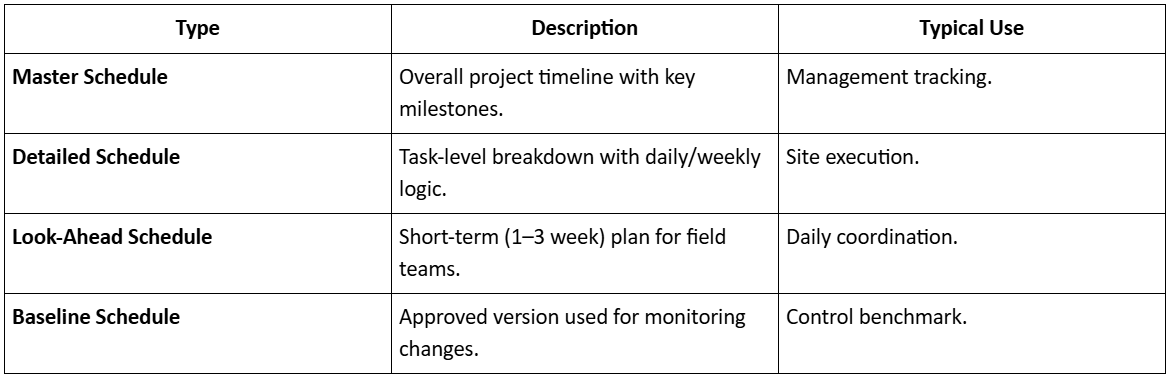
4. Types of Schedules
Principles of Planning and Scheduling

Category: Construction Academy

Subcategory: Budgeting and Planning

Subcategory: Construction Phase

Subcategory: Design Coordination

Subcategory: Estimation Techniques

Subcategory: Initiation and Feasibility

Subcategory: Introduction

Subcategory: Personal Management

Subcategory: Project Close-Out

Subcategory: Project Scheduling

Subcategory: Project Teams

Subcategory: Proposal Management

Subcategory: Total Quality Management

Subcategory: Tracking and Control

Subcategory: Work Breakdown

Category: Help Desk

Subcategory: Client

Subcategory: Construction 101

Subcategory: Contractor Management

Subcategory: Expense

Subcategory: Finance Budget

Subcategory: Inventory Management

Subcategory: My Approvals

Subcategory: Site Management

Subcategory: Vendor Management