Controlling Scope Changes During Design

Scope changes during design are inevitable — but unmanaged changes cause cost escalation, delays, and rework.

1. Common Sources of Design Change

  • Client-driven modifications.
  • Coordination conflicts (e.g., MEP vs. Structure).
  • Regulatory compliance updates.
  • Design development refinements.
  • Errors or omissions found during peer review.

2. Change Control Workflow
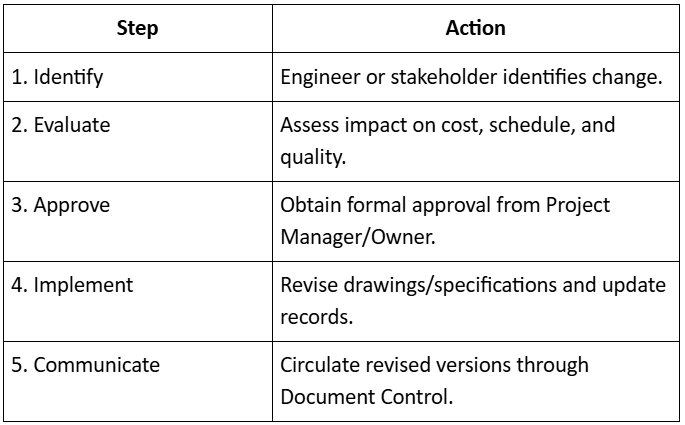
Controlling Scope Changes During Design

3. Tools for Scope Control

  • Design Change Register (DCR)
  • Request for Information (RFI) logs
  • Change Order Forms with justification
  • Version History Reports
“Every design change must be visible, justified, and approved — not just assumed.”

Category: Construction Academy

Subcategory: Budgeting and Planning

Subcategory: Construction Phase

Subcategory: Design Coordination

Subcategory: Estimation Techniques

Subcategory: Initiation and Feasibility

Subcategory: Introduction

Subcategory: Personal Management

Subcategory: Project Close-Out

Subcategory: Project Scheduling

Subcategory: Project Teams

Subcategory: Proposal Management

Subcategory: Total Quality Management

Subcategory: Tracking and Control

Subcategory: Work Breakdown

Category: Help Desk

Subcategory: Client

Subcategory: Construction 101

Subcategory: Contractor Management

Subcategory: Expense

Subcategory: Finance Budget

Subcategory: Inventory Management

Subcategory: My Approvals

Subcategory: Site Management

Subcategory: Vendor Management