Budgeting for Design Activities

Design development requires resources — architects, engineers, software, and coordination meetings — all of which have associated costs.

Hence, budgeting for design is as crucial as budgeting for construction.

1. Design Budget Components
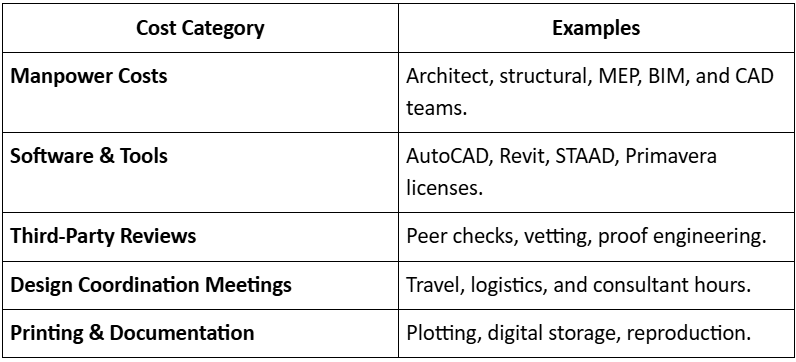
Budgeting for Design Activities

2. Budgeting Process

  1. Identify all design deliverables and required resources.
  2. Estimate hours and rates for each discipline.
  3. Include review and re-submission cycles.
  4. Add contingency (typically 5–10%) for scope changes.
  5. Track actual design hours vs. planned (Earned Value Technique).

3. Key Performance Indicators (KPIs)

  • Design cost % vs. total project cost (usually 5–8%).
  • Number of re-submissions per package.
  • Design productivity (drawings per engineer per month).
  • Design change impact on total project cost.
“Control your design hours, or they will control your budget.”

Category: Construction Academy

Subcategory: Budgeting and Planning

Subcategory: Construction Phase

Subcategory: Design Coordination

Subcategory: Estimation Techniques

Subcategory: Initiation and Feasibility

Subcategory: Introduction

Subcategory: Personal Management

Subcategory: Project Close-Out

Subcategory: Project Scheduling

Subcategory: Project Teams

Subcategory: Proposal Management

Subcategory: Total Quality Management

Subcategory: Tracking and Control

Subcategory: Work Breakdown

Category: Help Desk

Subcategory: Client

Subcategory: Construction 101

Subcategory: Contractor Management

Subcategory: Expense

Subcategory: Finance Budget

Subcategory: Inventory Management

Subcategory: My Approvals

Subcategory: Site Management

Subcategory: Vendor Management