The design process is the backbone of every construction project. Managing it efficiently means synchronizing multiple disciplines—architectural, structural, MEP, and civil—toward a unified vision and timeline.
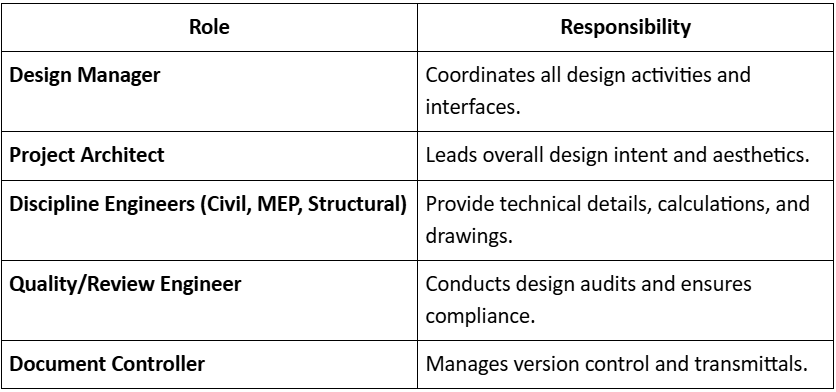
1. Design Management Roles
2. Design Workflow Stages
- Concept Design → Owner’s vision translated into preliminary sketches.
- Design Development → Technical details added; disciplines coordinate.
- Construction Documentation → Issued-for-construction (IFC) drawings and specs prepared.
- As-Built Documentation → Updated drawings post-construction for record keeping.
3. Design Management Best Practices
- Maintain a Design Deliverable Register (DDR) with status tracking.
- Use the Design Responsibility Matrix (DRM) for accountability.
- Follow controlled document numbering and revision tracking.
- Adopt digital collaboration tools (BIM 360, Orangescrum, or Revit Cloud).
“Reporting is not about documenting progress — it’s about driving it.”